|
Lesson Topic |
Assignments, Web Links, Etc… |
|
|
Curricular Competencies (CC): Planning and Conducting; Applying and Innovating
|
|
|
|
|
Physics 11 Review: |
|
|
|
CC: Communicating; Applying and Innovating
|
|
|
|
|
|
- finish lab, hand in, continue questions from a couple classes ago
- Parabolic practice from Kinematics review (linked above):
- # 5, 6, 8, 10, 12, 13, 15 (plus more from # 21 onwards)
|
|
- Projectile Motion Lab DUE
- Challenge question
|
|
|
- Quiz: Kinematics
- Newton’s Laws
|
CC: Communicating; Questioning and Predicting; Applying and Innovating
|
|
|
|
|
|
CC: Communicating; Planning and Conducting; Evaluating
|
|
|
|
|
|
CC: Applying and Innovating
- Prepare for next class’s quiz (Energy practice will be handed out next class)
|
|
- Questions?
- Quiz: Dynamics
|
CC: Communicating
- When finished quiz:
- Work Energy
Momentum Review Questions
- #2, 5, 6, 9, 15, 16, 20, 21, 22, 26, 27, 29 (do more if you like, but some are momentum that we haven’t covered.)
- W, E,
p DETAILED Key
|
|
|
|
|
- More power, energy, etc practice
|
|
|
Momentum Unit:
|
CC: Processing and analyzing data and information; Communicating
|
|
- Pendulum Lab due
- Hand out workbooks to those who have paid
- Lesson 1 Momentum (pg 210 – 211)
|

|
|
|
CC: Applying and Innovating
|
|
- Conservation of Momentum Lab
|
|
|
- Momentum Lab due
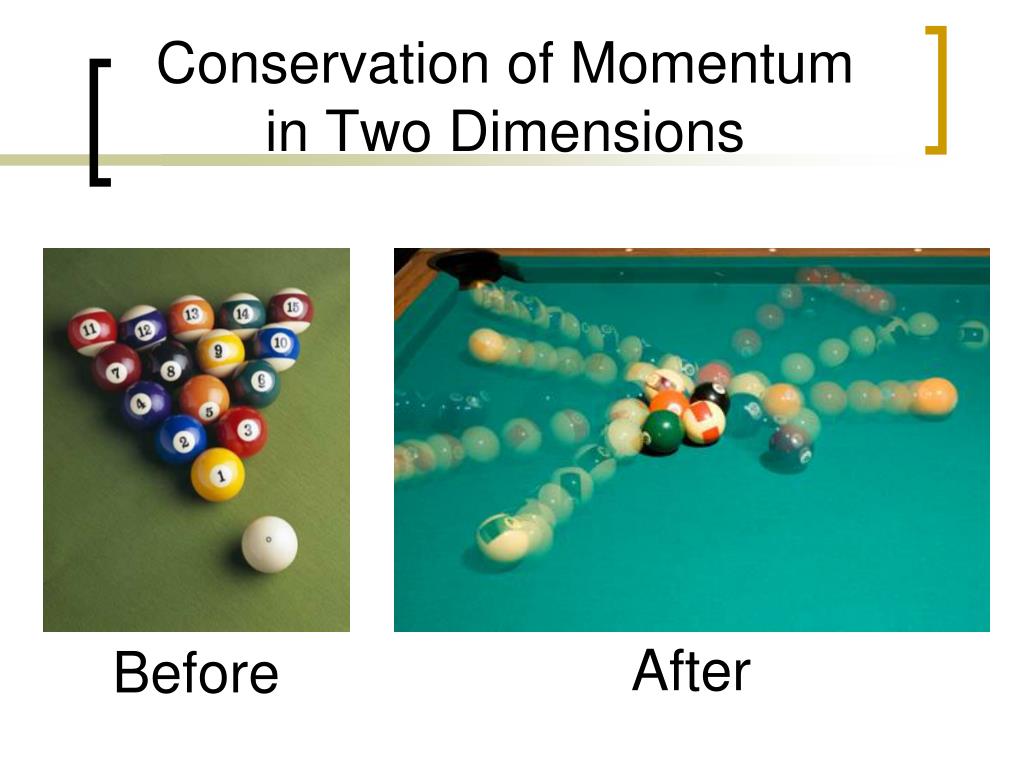
- Lesson 3 Two-Dimensional Interactions
|
- Practice pg 228 #1-6
- Practice Test: pg 231 #1-14
|
|
|
CC: Processing and analyzing data and information; Communicating
Work Energy Momentum Review Questions #3, 4, 7, 8, 10, 11, 12, 13, 14, 17, 18, 19, 24, 25, 28, 30 (The rest are energy, etc, and were previously assigned) Do at least: 3, 8, 13, 14, 18, 19, 24, 25 to prepare for the test
- QUIZ
- Another practice sheet for 2nd day:
|
|
|
|
|
Measurement of Motion: |
|
|
|
CC: Applying and Innovating; Questioning and Predicting
|
|
- Lesson 2: Special Theory of Relativity
|
|
|
- Lesson 3: Length Contraction
|
CC: Applying and Innovating
|
|
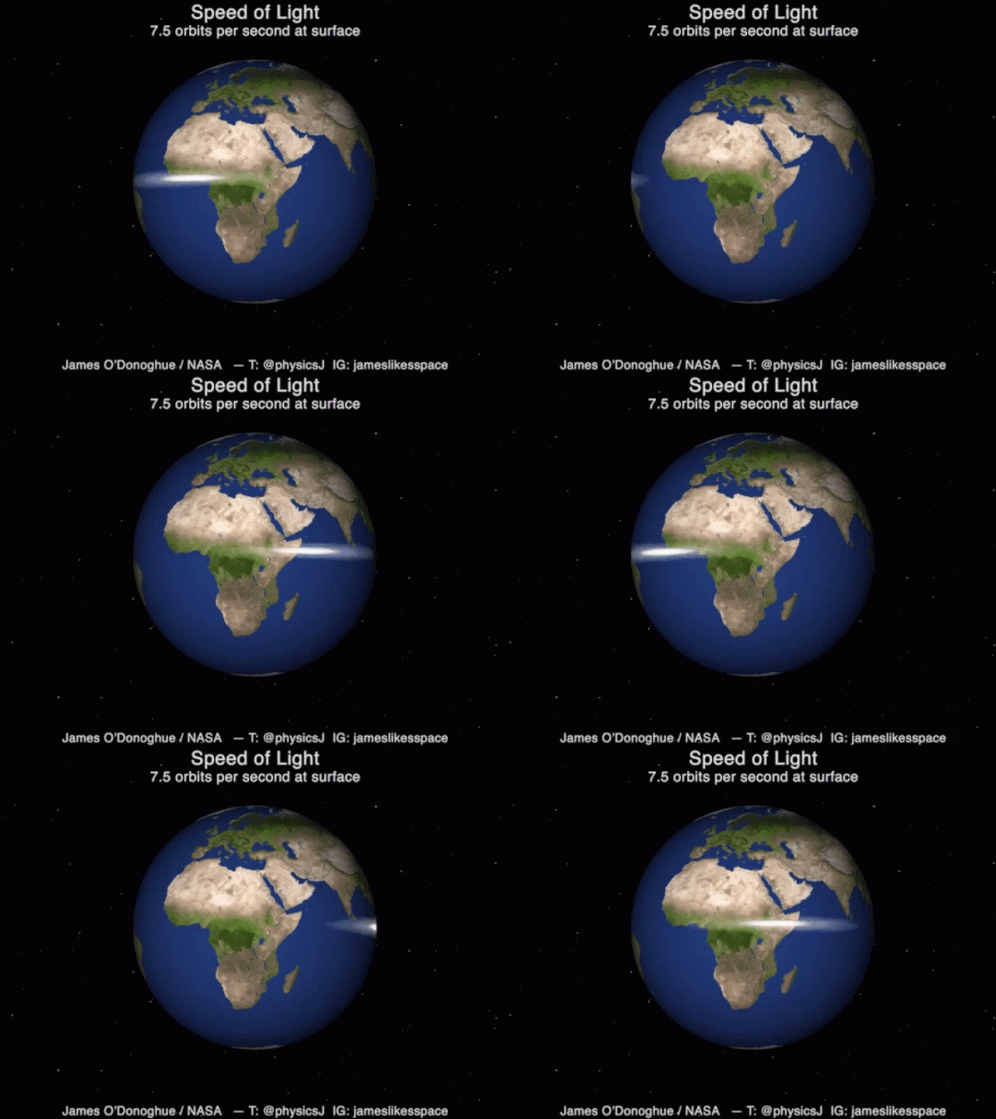
- Lesson 4: Mass Increase
- Lesson 5: Relativistic Addition of Velocities
|
CC: Applying and Innovating
|
|
|
|
|
|
- The Great Relativity Review Game
- Concept Review: pg 30 #1-10
|
|
|
CC: Applying and Innovating
|
|
|
CC: Applying and Innovating
- Review Sheet (similar to test, except on test there are also boat and general relativity questions)
|
|
- Test: Relativity Unit (inc general) /25 (about 45 minutes)
|
CC: Applying and Innovating; Communicating
|
|
Movie day… |
- Last half of Interstellar
|
|
Happy Spring Break!
|
|
|
Equilibrium Unit:
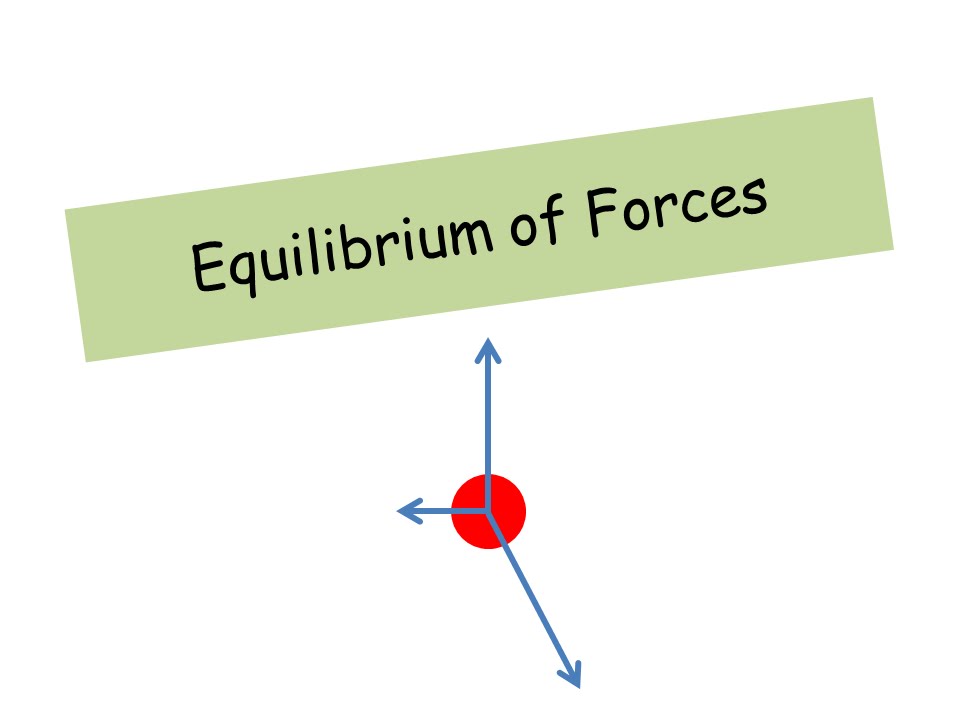
- Lesson 1: First Condition
|
CC: Planning and Conducting; Evaluating
- Teacher example, student practice, teacher example, student practice…
- Practice: pg 38 #1-10, pg 68 #7
|
|
|
|
|
|
- Example Equilibrium Lab Write-Up – BIG hints here!!
- For the Conclusion, tell me what you learned. For example
- DO say, “I learned that the sky is blue.”,
- NOT “I learned what colour the sky is.”
- NOT “I learned lots.”
|
|
- 1st Condition Quiz
- Lesson 2: Second Condition
|
CC: Applying and Innovating
|
|
- Equilibrium Lab due
- Lesson 2 continued
|
- Teacher example, student practice…
- Equilibrium WS3 and WS4 (plus WS2 #3, 5 & 6)
- (see linked worksheets and KEYs above, 3 lessons ago)
|
|
- Do pg 48 #2b as beginning activity
- Go over worksheet questions
- Equilibrium Project: plan and gather
|
- Try These A
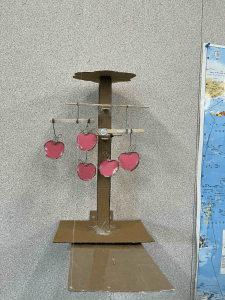
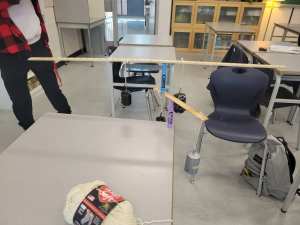
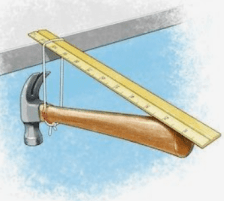
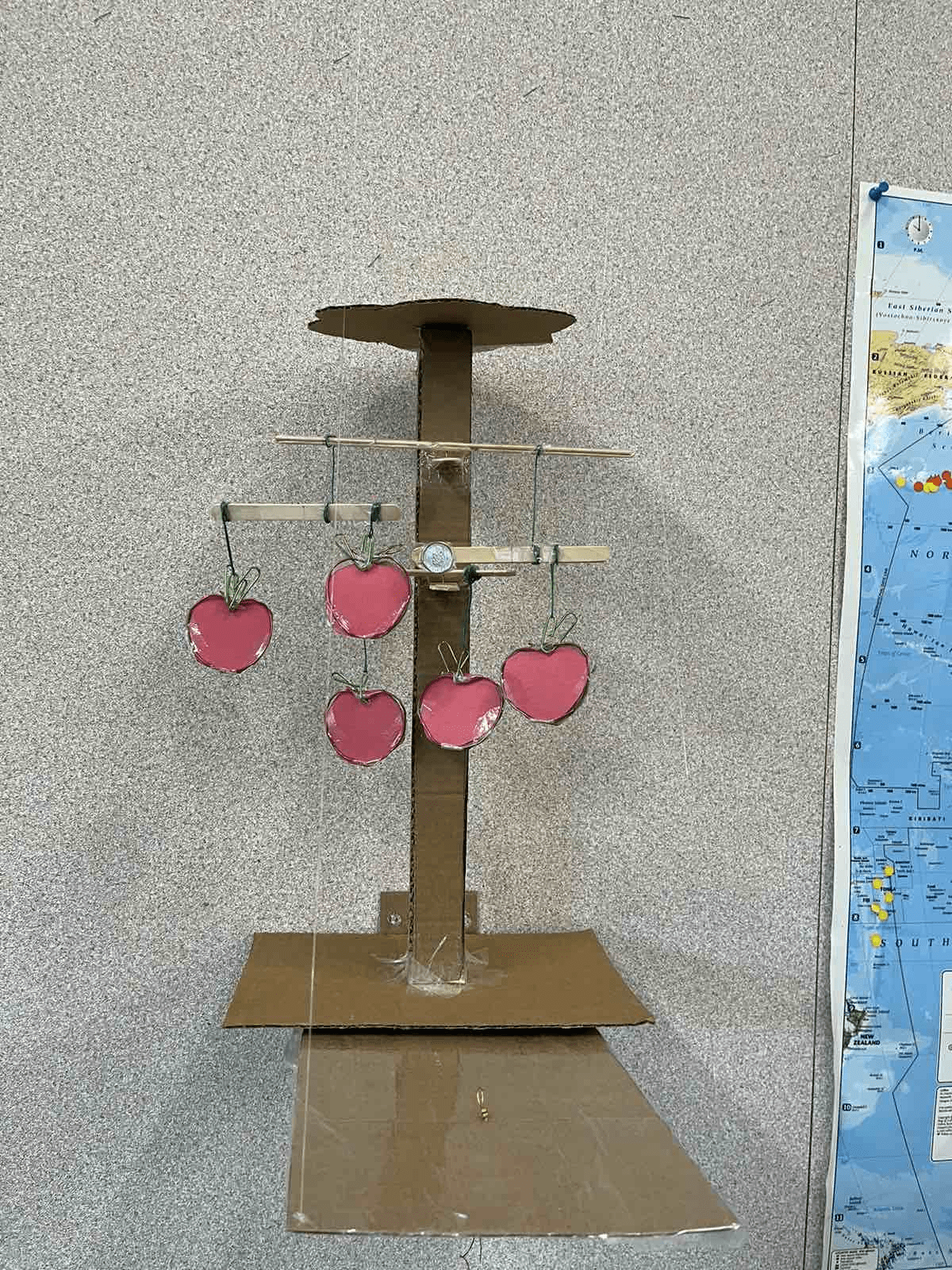
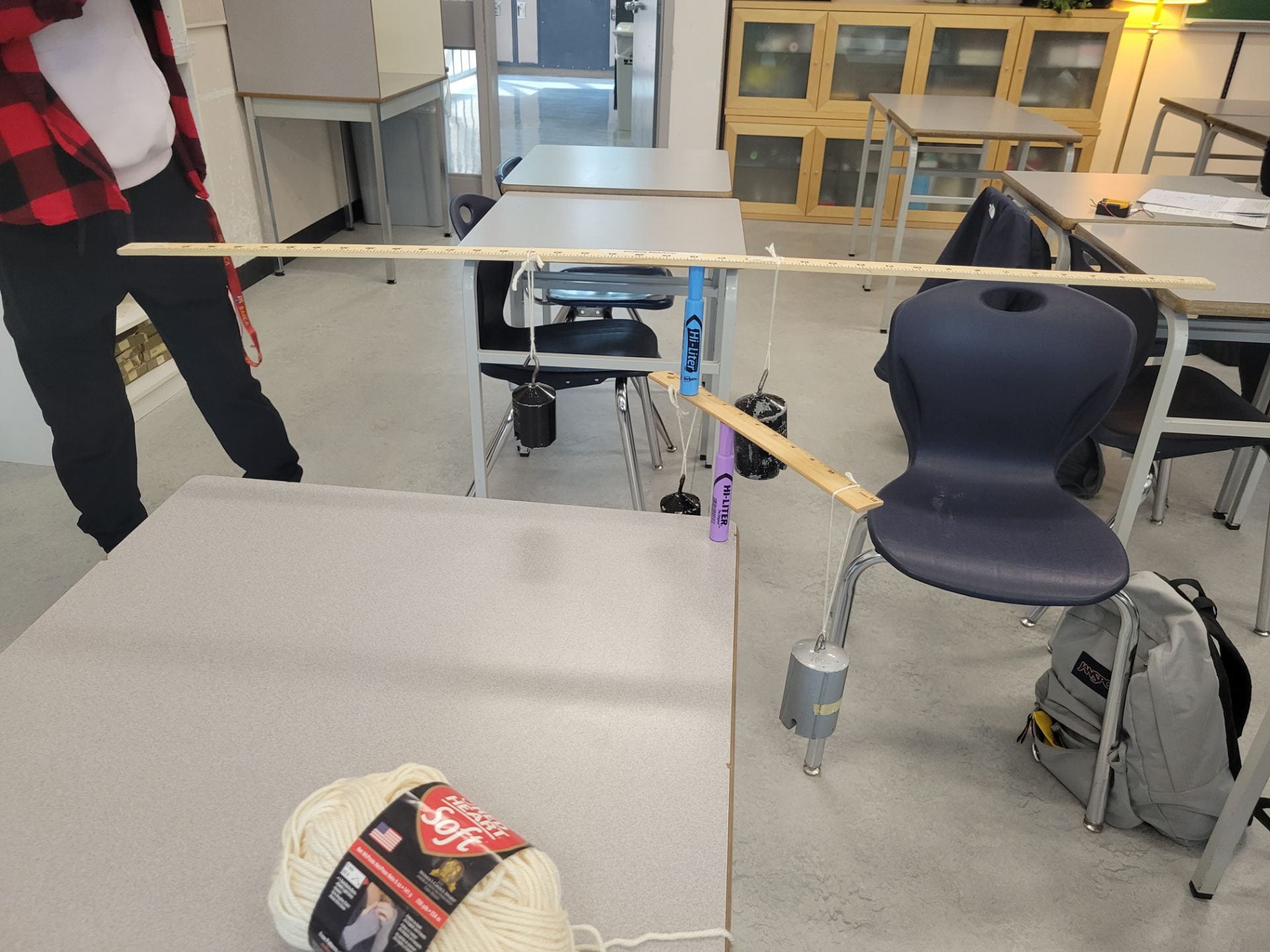
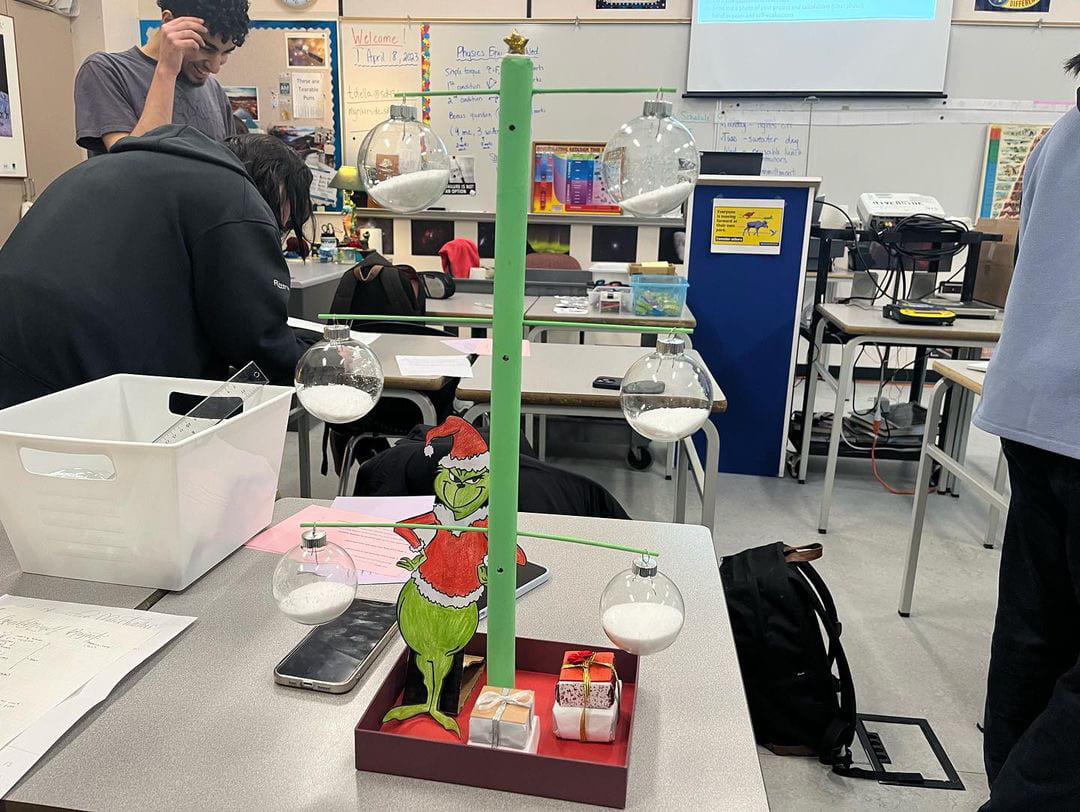
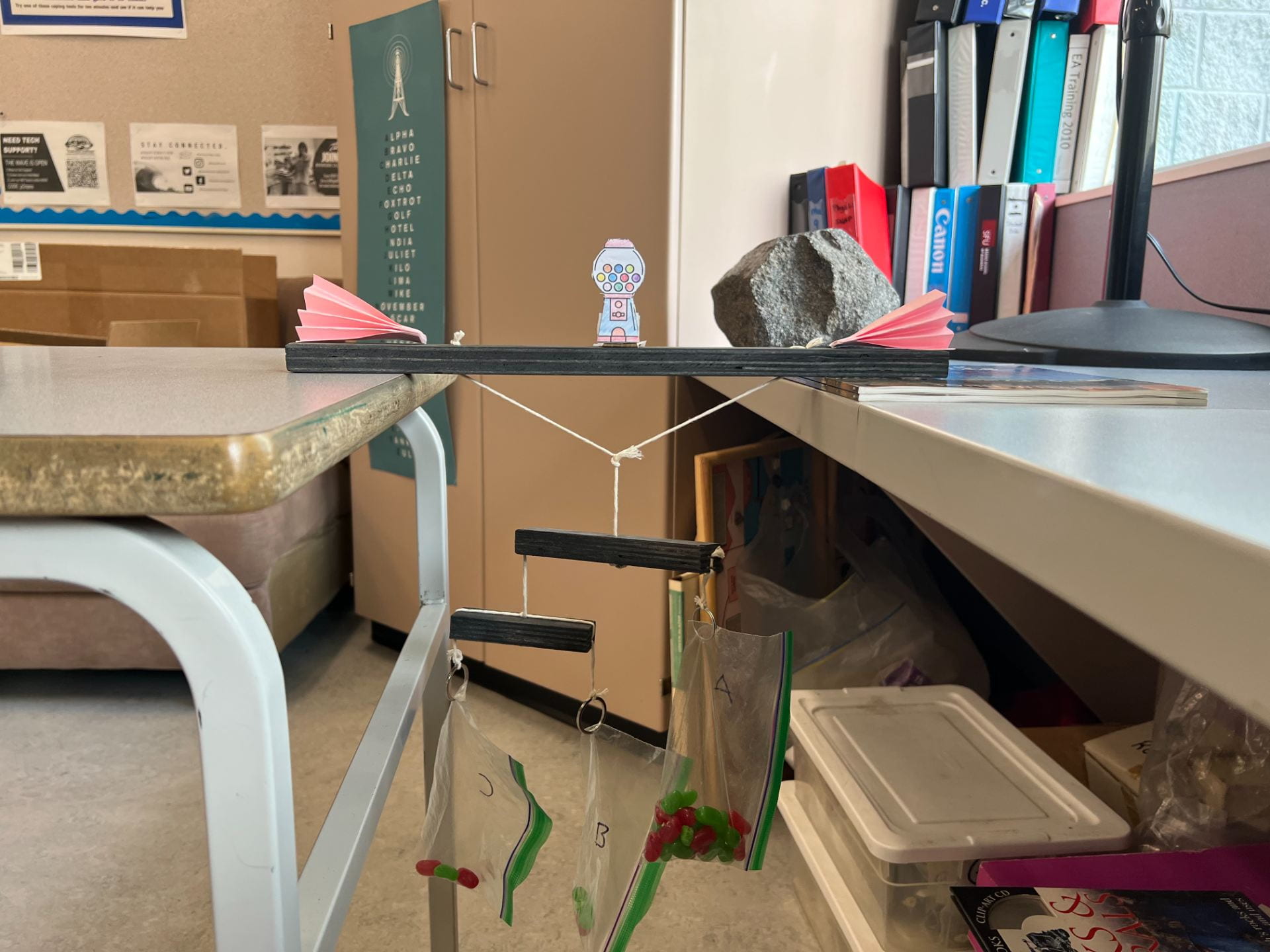
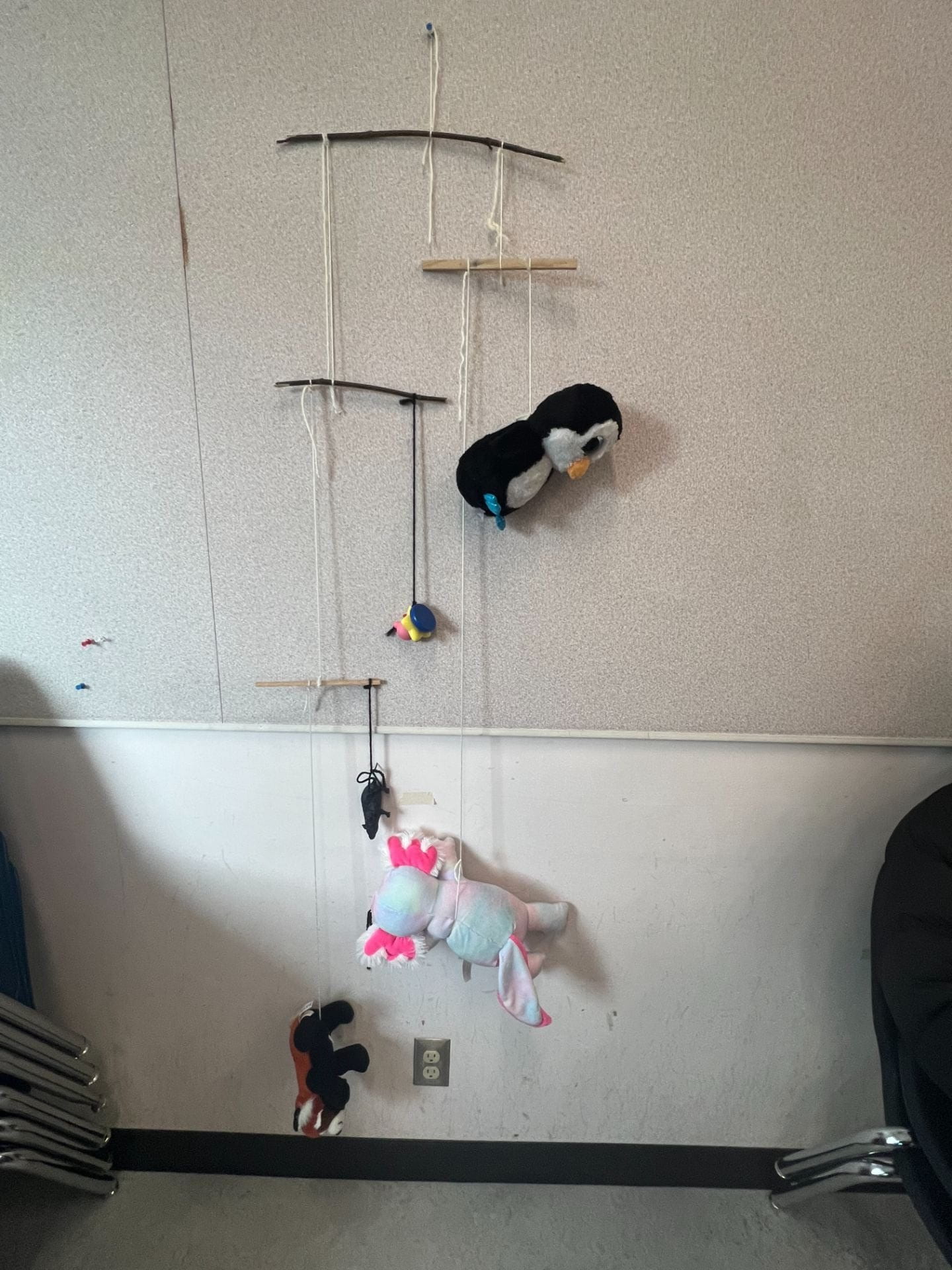
- In partners, or alone, please create an unlikely “balancing act” along with the equilibrium calculations for why it balances.
- Creativity and complexity will earn more marks
- Demonstrate and explain in the class
|
|
- Equilibrium Project: build
|
- Try These B
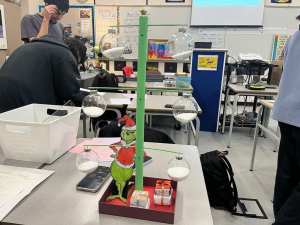
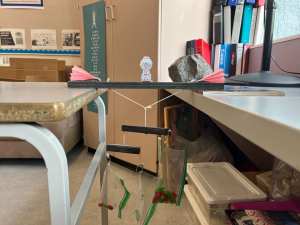
- Today: get your balancing act working and write up the calculations
- Marking guide:
- /5 marks Complexity – balancing in more than one-dimension, multiple levels or fulcrums, etc
- /5 marks Creativity – not just a copy from the internet, decorations, theme, wow-factor, etc
- /5 marks Calculations are clear, organized, correct, and include a picture of your balancing act
|
|
- Equilibrium Quiz
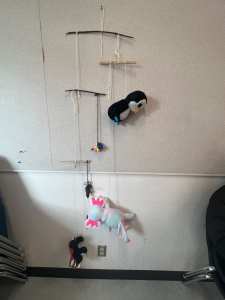
- Equilibrium Project: calculate
|
|
|
|
|
|
- Equilibrium Project: present and evaluate
- Study for test
|
- Quick presentation of what kind of equilibrium you have in your project
- Take a picture of your project and your mathematical calculation
- Email the picture and calculations to Ms. Della
- Post the picture and calculations to your EduBlog and do a core competencies reflection
|
|
- Test: Equilibrium Unit /27
|
CC: Communicating
|
|
Circular Motion & Gravitation Unit:
- Lesson 3: Uniform (Horizontal)
|
- Practice: pg 55 #1-11 (do at least # 1, 2, 4, 5, 8, 9, 11)
|
|
|
CC: Planning and Conducting; Evaluating – Assess risks in the context of personal safety and social responsibility.
|
|
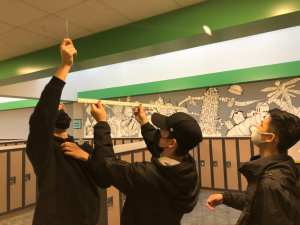
- Circular Orbits Lab continued
|
 |
|
|
|
|
- Circular motion Lab due
- Lesson 4 Vertical Circular Motion
|
CC: Applying and Innovating
|
|
|
|
|
- PhET Lab (preview of gravity)
|
CC: Processing and analyzing data and information
|
|
- Quiz: Circular Motion (3 questions) /6
- Questions on Gravitation Lab?
- Lesson 1 Newton’s Law of Universal Gravity
|
- Practice: pg 77 #1-13
- Finish gravitation lab
|
|
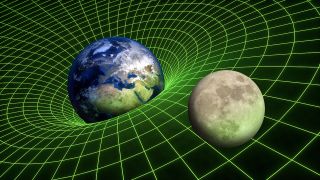
- Lesson 2 Gravitational Field Explanation
|
CC: Communicating; Applying and Innovating
- Practice: pg 84 #1-8
|
|
- Gravitation Lab due
- Lesson 3 Gravitational Potential Energy
|
CC: Applying and Innovating
- Review of Lessons 1 & 2: https://www.pbs.org/video/crash-course-physics-8/
- Practice: pg 90 #1-6 AND pg 199 #1-4
- Try questions from review package: #5, 11, 12, 19, 29, 32, 34, 36, 37, 42, 43, 44, 46, 49 (see handout or above)
|
|
|
CC: Applying and Innovating
|
|
|
- Preview: Pre-Roller Coaster Practice Worksheet
- In partners or alone, using the concepts of gravity and circular motion (as well as kinematics, energy, and forces), design a roller coaster.
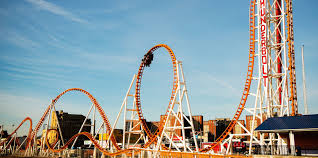 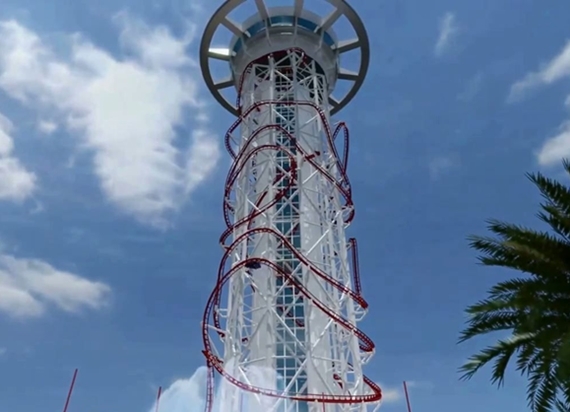 - It must have:
- at least one vertical loop (top: calculate minimum velocity to not fall out, and speed car is actually moving, do they need seatbelts?; bottom: calculate how fast is moving and the g-force felt (g-force = Fn/Fg))
- at least one horizontal loop (calculate the g-force felt by the riders half-way through loop)
- at least one hill (first motorized one doesn’t count; calculate velocity at top; will people feel like they are going to fly out of car at the top of the hill? Are seatbelts needed?)
- Numerical values to use:
- Start with 900,000J of potential energy at top of motorized hill, 131m high
- assume 500.J converted to heat energy per meter (saves on friction/heat calculations everywhere)
- no motorized help once car is brought to top of first hill
- the car with two riders is 700.kg
- maximum speed of 240 km/h (67 m/s)
- g-forces no greater than 6.0g, and only briefly (largest forces are felt at bottom of curves)
- 1800m of track in total from top of motorized hill to very end
- Use triangles to calculate distances along slopes; use circumferences to calculate distances along curves; some estimation is ok for distances.
- Hints:
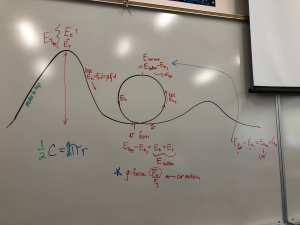
|
|
|
- What you will hand in:
- Sketch of your coaster labeled with heights, radii, distances, etc
- Calculations of speeds and g-forces at each critical point (tops, bottoms, etc), remember to consider loss to heat energy (500.J/m)
- Calculate the coefficient of friction needed on the final stretch (and how long is that stretch?) to stop your car
|
|
- Circular Motion and Gravitation Review
|
CC: Applying and Innovating
|
|
- Test: Circular Motion and Gravitation /35
|
- Midterm review once complete test
|
|
- Roller Coaster due
- Mid(2/3)term Review
|
- Overview of Midterm: /35 (see more details in link a couple days ago)
- Physics 11 Review #1-4
- Momentum #5-6
- Measurement of Motion #7-10
- Equilibrium #11-14
- Circ Motion and Grav #15-18
- Practice exam similar to midterm
- Review similar to Midterm for printing a second copy
- Answers: 1. speed, 2. 2.8s, 3. 0.86m/s^2, 4. 5.2 x 10^4J, 5. 6.5Ns[18 S of W], 6. 13m/s[35 E of N], 7. 26m downstream, 8. 4.8us, 9. 2.3×10^8m/s, 10. 2.8×10^7m/s toward Earth, 11. 59 W of N, 12. 76 degrees, 13. 2.5m from pivot on sister’s side, 14. 0.24kg, 15. 4.2×10^4m/s^2, 16. 52N, 17. 6.2kg, 18. 6.2×10^12kg
- Midterm Practice Detailed Key
- Extra Review Resources: https://myriverside.sd43.bc.ca/tdella/extra-review-phys-12/
|
|
- 2/3 term Review Game
- Relativity Practice
|
|
|
|
CC: Communicating; Processing and Analyzing data and information

|
|
Electrostatics Unit:
|
CC: Applying and Innovating; Processing and Analyzing data and information
|
|
- Lesson 6 Electrostatics (lesson from pg 105)
|
|
|
- Lessons 7 Electric Fields
|
CC: Applying and Innovating
|
|
- Lesson 8 Potential due to a Point
|
CC: Applying and Innovating
- Practice: pg 126 # 1 – 8 AND review for tomorrow’s quiz
|
|
- Quiz (Electric Forces and Fields) /6
- Lesson 9 Electric Potential in a Uniform Electric Field (Parallel Plates)
|
CC: Applying and Innovating
|
|
|
CC: Processing and analyzing data and information; Communicating
- Online lab: https://kforinas.pages.iu.edu/physlets/electrostatics/electrostatics.html /20
- Note: Arrows pointing toward each other mean attraction
- Lab write-up – do right on the handout:
- 10 marks: Do all the sections except the last one (dipole). Label the first section as A, the second as B, etc. You will do A to I, and answer questions #1-20 as you do these sections.
- 5 marks: Add in appropriate formula where they belong.
- 5 marks: Write a brief summary on the back of the handout describing key concepts/what you learned from this lab. (Do NOT say “I learned what an equipotential line is.” DO say “I learned that an equipotential line is a line connecting points of equal potential (V).”)
- Please hand in a hard copy in class or by email to tdella@sd43.bc.ca 🙂
|
|
|
CC: Applying and Innovating
|
|
- Electrostatics Lab due
- Review
|
CC: Applying and Innovating
- Kahoot game: Electrostatics
- Continue review package or own review
|
|
|
CC: Communicating; Applying and Innovating; Planning and Conducting
- When you finish the test: Final Exam Prep
- Phys 12 Final Exam Overview (except removed one vector question, added one magnetism one; total now /54)
|
|
|
- Do an exam as if it were the real final exam
|
|
Magnetism Unit:
|
- Practice pg 147 #1-4
- Lesson 10 Hand Rules Kahoot (expires Jan 30, 2024)
|
|
- Lesson 11 Magnetic Forces in a Current Carrying Conductor
|
CC: Applying and Innovating
|
|
|
CC: Applying and Innovating
-
Key points for Lesson 12 Cathode Rays
Lots of solving practice in this section. Set two forces or energies equal to each other and then solve for the variable you are looking for. Even be able to solve for “q/m”.
Deflected? Use: Fm = Fc
Undeflected? Use: Fm = Fe
Looking for speed? Use: Ep = Ek
Magnetic field involved? Use Fc = FB or Fe = FB
If particles travel parallel to field, then no deflection, so no radius.
Formula:
Ep = Vq Ek = ½mv2 Fe = qE Fc = mv2/r FB = qvB Fg = mg
- Practice pg 162 #1 – 15
|
|
- Lesson 13 Electromagnetic Induction
|
|
|
- Review: Magnetism so far (Escape Room)
|
CC: Applying and Innovating; Communicating
|
|
|
|
|
- Lesson 14 Using Induced Currents
|
|
|
- Quiz /12
- Lesson 15 EMF in a Straight Conductor
|
- Quiz details: on sections 10-13, a couple hand rule questions, given answers, show your work and add units/directions as needed.
- Practice pg 187 #1-12
|
|
- Lesson 16 Transformers (Induction Coil)
- Lesson 17 Power Transmission
|
|
|
|
- Hand out: Magnetism Provincial Review Questions(simple key at end)
- Test details:
- out of 31, 11 m.c. (1-2 marks each), 3 long answer, numerous direction questions, last question is why does motor heat up when is slowed down (like pg 182 #4)
|
|
|
- Review for Final exam when finished test
|
|
|
|
|
|
CC: Communicating
|
|
|
 |






 Teena's World